
Quick Answer: How Long Is Recovery?
Most people need about several days to one week away from work or normal light activities after labiaplasty, depending on their job, pain level and surgeon's instructions. Strenuous exercise, cycling, swimming, tampon use and sexual activity are commonly restricted for about four to six weeks, or until the surgeon clears the patient. Residual swelling may continue improving for months.
Recovery is not the same for everyone. Your timeline can depend on the surgical technique, the amount of tissue removed, whether another procedure was performed at the same time, your general health, smoking status, aftercare, and how closely you follow post-operative instructions.
Key takeaway
Use general timelines for planning, but follow the restrictions and warning-sign instructions from your own surgical team.
Recovery Timeline at a Glance
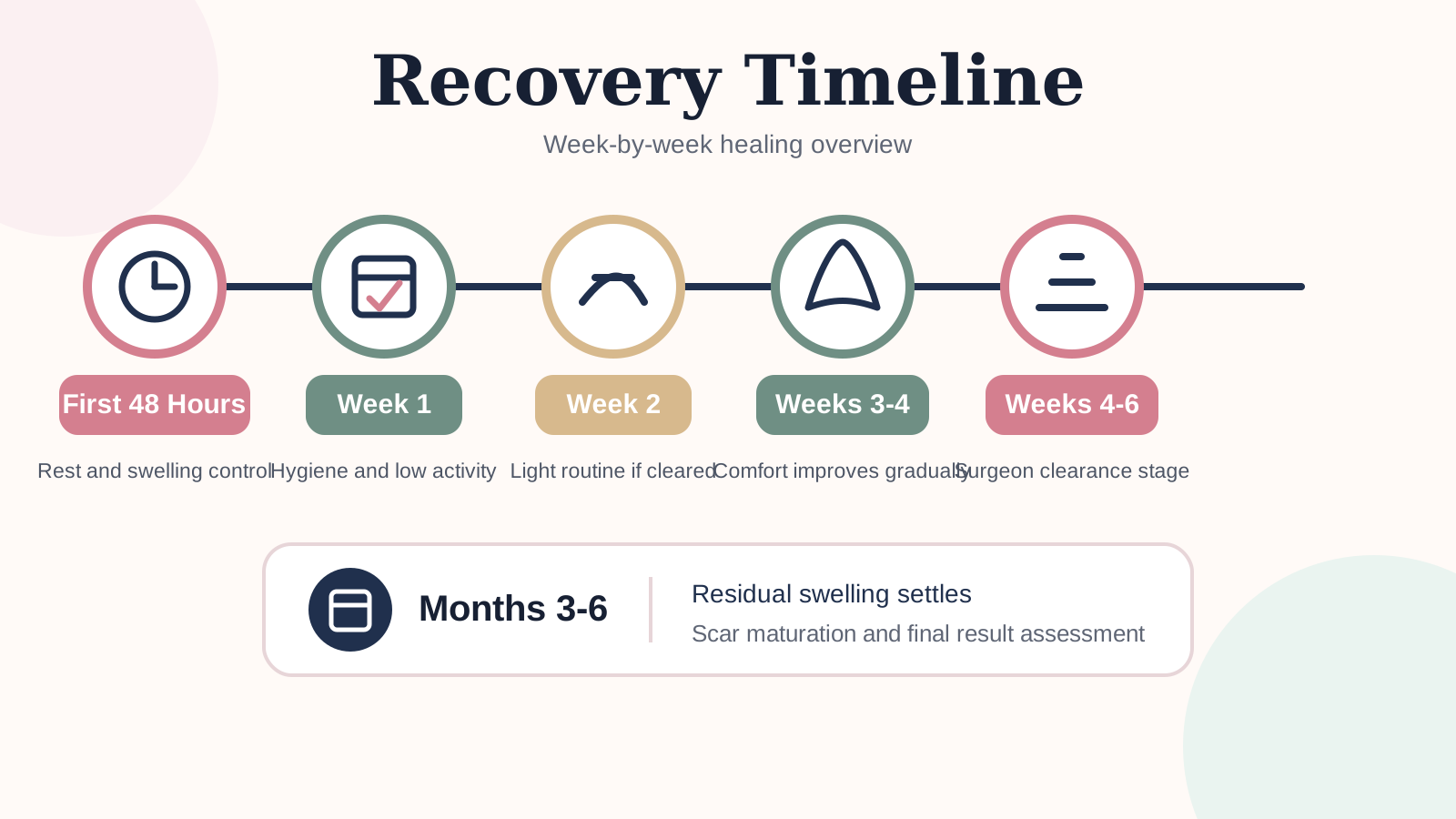
The table below summarizes common healing stages. It does not replace an individualized post-operative plan.
| Recovery stage | What you may notice | Common care focus |
|---|---|---|
| First 24-48 hours | Swelling, tenderness, spotting, tiredness | Rest, cold compresses if approved, medication instructions |
| Days 3-7 | Swelling may peak, sitting may feel uncomfortable | Gentle hygiene, limited activity, follow-up instructions |
| Week 2 | Pain usually improves, swelling still present | Light routine, avoid friction and strenuous movement |
| Weeks 3-4 | More comfort walking and sitting | Continue avoiding sex, tampons, swimming and intense exercise |
| Weeks 4-6 | Many patients are cleared for more activity | Surgeon check before exercise or sexual activity |
| Months 3-6 | Final swelling gradually settles | Scar maturation and final results become clearer |
First 24-48 Hours After Surgery
The first two days are usually the most delicate part of recovery. You may feel soreness, swelling, bruising, light bleeding or spotting, and general tiredness from anesthesia or sedation.
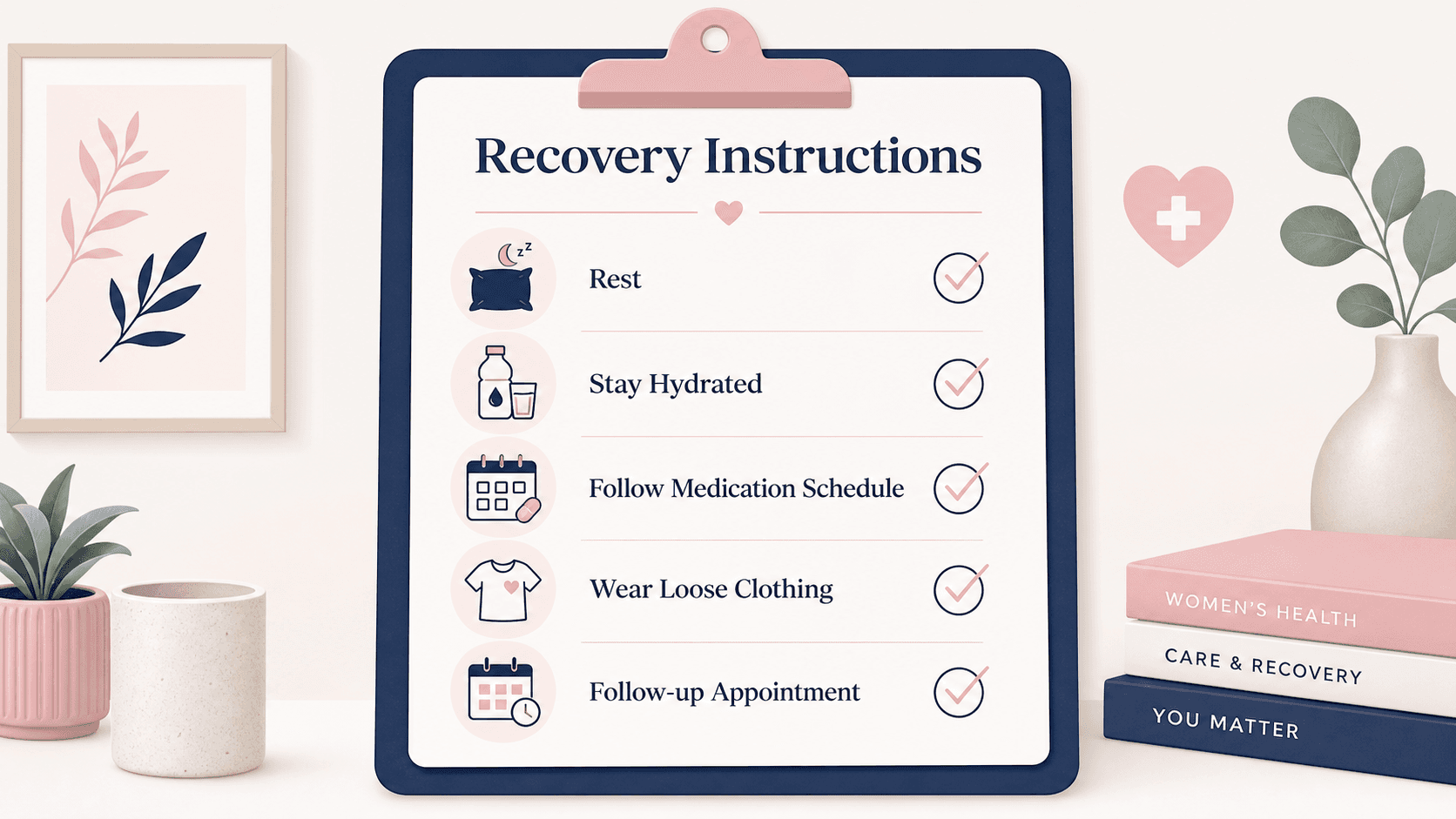
During this stage, your main goal is simple: rest and protect the incision area. Your surgeon may recommend pelvic elevation, cold compresses exactly as instructed, prescribed or approved pain medication, loose breathable clothing, limited walking, and careful hygiene.
- Rest with your pelvis slightly elevated if instructed
- Use cold compresses only as directed
- Take medication according to your written plan
- Avoid unnecessary bending, lifting or long walks
- Keep the area clean and dry according to aftercare instructions
What Is Normal in the First Two Days?
Mild to moderate swelling, tenderness, bruising and small amounts of spotting can be expected. Heavy bleeding, fever, severe worsening pain, pus-like discharge or the incision opening should be treated as warning signs.
When to seek medical help
Call your surgeon urgently for heavy bleeding, fever, foul drainage, worsening severe pain, rapidly expanding swelling, or any opening of the incision.
Days 3-7: The First Week
The first week is when swelling can feel most noticeable. Sitting, walking, using the bathroom and wearing certain clothing may feel uncomfortable. Many patients plan to take time off work during this period, especially if their job requires standing, lifting, walking or sitting for long periods.
Use this week to avoid irritation. Loose underwear, soft clothing and careful hygiene are usually more comfortable than tight leggings, jeans or synthetic fabrics.
- Running
- Cycling
- Swimming
- Heavy lifting
- Sexual activity
- Tampon use
- Long sitting without breaks
- Touching or inspecting the area too often
Week 2: Pain Often Improves
By the second week, many people feel more comfortable with light daily movement. Pain may decrease, but swelling can still be present. Some people feel ready to do more at this stage, but overactivity can slow healing or increase irritation.
Stitches may feel itchy, tight or noticeable as tissue heals. Many labiaplasty incisions are closed with absorbable sutures, which dissolve over time, but every surgeon's technique is different.
- Short walks if approved
- Desk work if comfortable
- Careful showering
- Loose clothing
- Gentle hygiene
- Follow-up visit attendance
Weeks 3-4: Better, But Not Fully Healed
Weeks three and four can be confusing because you may feel much better, but the tissue is still healing. This is when some patients accidentally do too much too soon.
Even if discomfort has improved, your surgeon may still restrict intercourse, tampons, cycling, running, swimming, hot tubs, high-intensity workouts and heavy lifting.
Key takeaway
Do not judge your final result during the first few weeks. Swelling, bruising and unevenness can temporarily distort shape and symmetry.
Weeks 4-6: Activity Clearance Stage
Around weeks four to six, many patients return for a checkup or receive updated instructions. This is often when a surgeon may decide whether it is safe to resume exercise, sexual activity, tampon use or swimming.
Do not restart these activities just because you feel better. Clearance should come from your surgeon, because healing happens both on the surface and deeper in the tissue.
Months 3-6: Final Swelling and Results
By three to six months, swelling usually continues to settle and the final result becomes easier to evaluate. Scars may soften and become less noticeable with time, although individual healing varies.
If you are worried about asymmetry, bumps, firmness or visible scarring, discuss it with your surgeon. In many cases, patience is needed before judging the final outcome. Revision decisions are usually not rushed unless there is a medical problem.
What Can Affect Recovery Time?
Several factors can make recovery faster or slower, including surgical technique, the amount of tissue removed, combined procedures, nicotine use, activity level and your body's healing response.
Two common reduction techniques are the trim technique and the wedge technique. The trim approach removes tissue from the outer edge, while the wedge approach removes a central section and preserves more of the natural edge. Your surgeon should explain which approach fits your anatomy and goals.
- Surgical technique
- Amount of tissue removed
- Combined procedures
- Smoking or nicotine use
- Early overactivity or friction
- Individual swelling and bruising patterns
Warning Signs: When to Call Your Surgeon
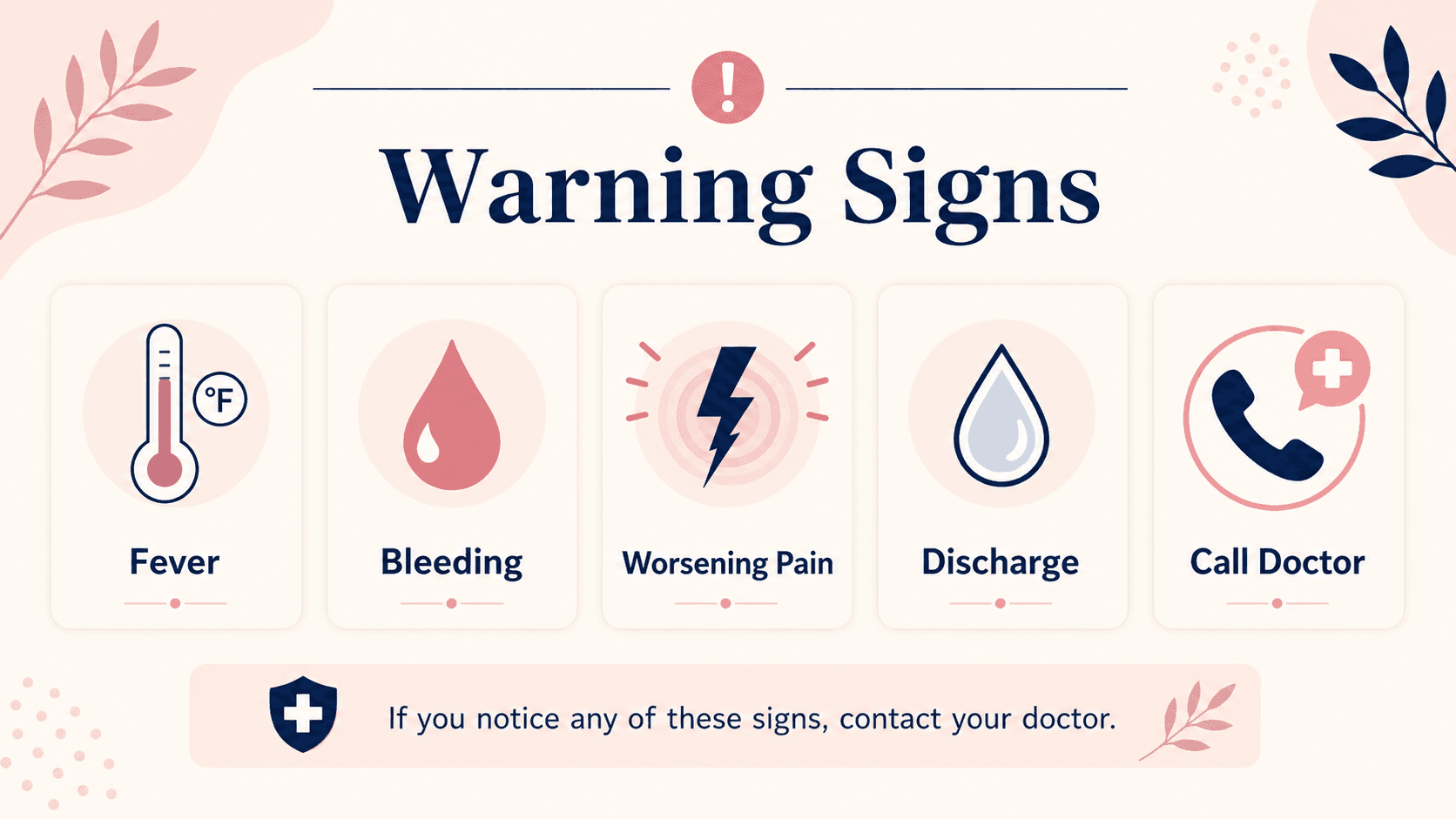
Call your surgeon or seek medical advice if symptoms worsen instead of gradually improving, or if you notice symptoms that your aftercare instructions list as urgent.
- Fever
- Increased bleeding
- Blood clots or heavy bleeding
- Worsening pain
- Excessive swelling
- Discolored or unusual discharge
- Severe pain while urinating or having a bowel movement
- Opening of the incision site
Recovery Tips
Wear loose clothing. Choose loose underwear, soft pants or dresses when possible, and avoid tight seams or synthetic materials that may rub the incision area.
Follow hygiene instructions carefully. Your surgeon may give specific washing, drying and ointment instructions. Do not apply products unless your surgeon approves them.
Avoid comparing your healing to photos online. Recovery photos can be misleading and may not match your procedure, anatomy, swelling level or surgeon's technique. For AdSense-safe and medically responsible content, it is better to focus on healing signs, comfort and surgeon guidance rather than graphic before-and-after comparisons.
Keep follow-up appointments. These visits help your surgeon check healing, answer concerns and update activity restrictions.
Be patient with swelling. Swelling can change from day to day. It can look worse after more activity and better after rest. Final settling can take months.
Final Thoughts
A week-by-week labiaplasty recovery timeline can help you understand what may happen after surgery, but your surgeon's instructions should always come first. Most patients move gradually from rest, to light activity, to normal routines over several weeks.
The most important recovery habits are avoiding friction, following hygiene instructions, watching for warning signs and giving swelling enough time to settle.
Frequently Asked Questions
How painful is labiaplasty recovery?+
Pain varies. Many people describe soreness, tenderness, pressure or stinging rather than constant severe pain. Your surgeon may prescribe or recommend pain control based on your situation.
How long does swelling last after labiaplasty?+
The most noticeable swelling often improves over the first several weeks, but residual swelling may take months to fully settle.
When can I go back to work after labiaplasty?+
Some people return to light or desk-based work after a few days, while others take about a week or longer. Jobs involving lifting, long standing or physical activity may require more time away.
When can I exercise after labiaplasty?+
Strenuous exercise is commonly avoided for four to six weeks or until your surgeon clears you. Cycling, running and swimming are usually restricted during this period.
When can I have sex after labiaplasty?+
Many surgeons restrict sexual activity for about four to six weeks, but the exact timing depends on your healing and your surgeon's examination. Do not resume sexual activity until you are cleared.
Are stitches removed after labiaplasty?+
Many procedures use absorbable stitches that dissolve on their own, but your surgeon will explain what type of sutures were used and how to care for them.
Is it normal for one side to look more swollen?+
Temporary asymmetry can happen during healing because swelling does not always settle evenly. If one side becomes increasingly painful, very swollen, bleeding or draining fluid, contact your surgeon.
When will I see final labiaplasty results?+
Some improvement may be visible after the first several weeks, but final results can take several months as swelling settles and scars mature.
Author
Labiaplasty Guide Editorial Team
Medical education editorial team
Original educational content written for adult patient education. Last updated July 23, 2026.
Medical reviewer
Gary J. Alter, M.D.
Board-certified plastic surgeon and urologist
Also known as “The Vagina Whisperer”. Reviewed on July 23, 2026.
Country-specific search notes
This guide is written for adults researching labiaplasty in the United States, Canada, Australia, and the United Kingdom. Terms, insurance rules, private fees, and surgeon credentials vary by country, so use the country guide alongside the core medical pages.
References
- Labiaplasty: Surgery, Recovery & What To Expect — Cleveland Clinic
- Labia Majoraplasty — American Society of Plastic Surgeons
- Labiaplasty - Aftercare & Recovery — The Aesthetic Society
Medical disclaimer
This educational website does not provide personal medical advice, diagnosis, or treatment. Decisions about labiaplasty should be made with a qualified clinician who can review your anatomy, symptoms, goals, medical history, and risks.